
Knowledge Centre
Vacuum Cleaner-52
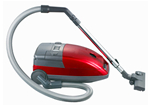
Cordless Vacuum Cleaner, Handheld Vacuum Cleaner, Stick Vacuum Cleaner, Hand Vacuum, Mini Vacuum, Cordless Stick Vacuum, Lightweight Vacuum, Rechargeable Vacuum, Portable Vacuum, Car Vacuum, Desktop Vacuum, Keyboard Vacuum, Wet and Dry Hand Vacuum, Pet Hair Vacuum, Battery-Powered Vacuum.
无线吸尘器、手持吸尘器、立式吸尘器、手持式吸尘器、迷你吸尘器、无线直立式吸尘器、轻量化吸尘器、充电式吸尘器、便携式吸尘器、车载吸尘器、桌面吸尘器、键盘吸尘器、干湿两用手持吸尘器、宠物毛发吸尘器、电池供电吸尘器。
"Products are named differently in the market, but their underlying RCM regulatory pathways are essentially identical." To illustrate this regulatory principle, let us examine a specific case study: 产品名称因市场需求而有所变化,但是通常它们在 RCM 认证链路是一致的。以下,我们用一个例子展开。
Route A: Low-Voltage / Wireless Power Supply Pathway(DC Low-Voltage Input, e.g., Handheld Cordless Battery-Operated, Robotic, or USB-Powered)If the vacuum cleaner is powered by an internal lithium battery (charged via a USB interface or low-voltage dock) or operates strictly on direct current low voltage where the rated voltage does not exceed 50 V AC or 120 V ripple-free DC, the device is not classified as a high-risk regulated electrical article under the Electrical Equipment Safety System (EESS).
Step 1:
Electromagnetic Compatibility (EMC) Testing Standards
In accordance with the ACMA EMC regulatory arrangements, low-voltage vacuum cleaners containing motor switching circuits or electronic control boards fall under mandatory EMC jurisdiction. The product must comply with the following electromagnetic compatibility or radiocommunications standards, which must be explicitly listed in the technical file:
- AS/NZS CISPR 14.1 (Electromagnetic compatibility — Requirements for household appliances, electric tools and similar apparatus — Part 1: Emission).
- (Note: If the vacuum cleaner integrates smart control modules, such as built-in wireless Wi-Fi or Bluetooth App connectivity for maps and scheduling, it is classified as radiocommunications equipment. Consequently, it must additionally pass the AS/NZS 4268 standard for short-range radio devices and obtain a corresponding RF evaluation report).
Step 2:
Safety and Battery Compliance Core Evidence
Although low-voltage products themselves do not require a mandatory SAA Electrical Safety Certificate, a robust compliance evidence chain must still be maintained under general safety principles to withstand platform audits and customs inspections:
(Note: For rechargeable vacuum cleaners powered by an internal lithium battery, the internal battery pack/cells must independently pass IEC 62133-2 safety testing with a comprehensive English report. A valid UN 38.3 transport safety report is also mandatory to substantiate basic product safety).
Step 3:
Conformity Assessment and Technical File (DoC) Compilation
Because low-voltage devices are generally classified as Level 1 (low risk) or fall outside the EESS mandatory registration scope, registration of the complete low-voltage appliance in the official EESS database is typically not required.
The overseas manufacturer must collaborate with a registered Australian Responsible Supplier to compile and execute a Declaration of Conformity (DoC) under ACMA .
Step 4:
Affixing the Regulatory Access Mark (RCM Label)
Once the complete technical construction file is established and the DoC is signed, the product can be legally labeled with the unique RCM logo. The mark must be at least 3mm in height and clearly visible on the product rating label, external packaging, and user manuals.
Route B: High-Voltage Direct Power Supply Pathway(AC Mains-Powered 220-240V, Classified as EESS Level 3 Regulated Article)If the vacuum cleaner connects directly to 220-240V AC mains power (such as traditional corded canister or upright household vacuum cleaners), its operating voltage exceeds 50V AC and it serves a household or similar purpose. Under the AusNZ Electrical Equipment Safety System (EESS), it is explicitly categorized as a Level 3 (High Risk) Prescribed Electrical Article and must follow the most stringent market access protocol.Step 1: Electromagnetic Compatibility (EMC) Testing StandardsAccording to the ACMA EMC framework, mains-powered vacuum cleaners fall under mandatory EMC jurisdiction. The product must satisfy the following electromagnetic compatibility or radiocommunications standards, which must be explicitly itemized:
- AS/NZS CISPR 14.1 (Electromagnetic compatibility — Requirements for household appliances, electric tools and similar apparatus — Part 1: Emission).
- (Note: If the appliance features smart control modules, such as built-in Wi-Fi or Bluetooth App controls, it must additionally pass the AS/NZS 4268 standard for short-range radio devices and obtain a corresponding RF/EMF report).
Step 2: Product Safety Testing StandardsPrior to applying for certification, the product must undergo evaluation by a qualified ISO 17025 accredited laboratory and strictly fulfill the following AS/NZS safety standards, which must be clearly specified in the documentation:
- AS/NZS 60335.2.2 (Household and similar electrical appliances — Safety — Part 2.2: Particular requirements for vacuum cleaners and water-suction cleaning appliances).
- AS/NZS 60335.1 (Household and similar electrical appliances — Safety — Part 1: General requirements).
- (Note: The integrated Australian mains plug and flexible supply cord are classified as high-risk core components. They must independently comply with AS/NZS 3112 and AS/NZS 3191 standards, respectively, and must possess their own valid, standalone SAA safety certificates before the complete appliance can be approved. If an external independent power adapter or docking charger is supplied for a cordless stick vacuum, that charging unit must also independently comply with AS/NZS 60335.2.29 or AS/NZS 62368.1 and hold a valid SAA certificate).
Step 3: Application for a Certificate of Conformity (SAA Certificate / CoA)
Since the mains-powered configuration represents a Level 3 high-risk regulated article, ordinary overseas test reports or standard CB reports cannot be used on their own to sell the product legally in the Australian and New Zealand markets. The comprehensive safety test reports matching the AS/NZS standards must be submitted to an authorized third-party Recognised External Certification Scheme (RECS) certifier (such as SAA Approvals, Global-Mark, or TÜV Rheinland) for independent expert review. Upon approval, a formal Certificate of Conformity (commonly referred to as an SAA Certificate) will be issued, featuring a unique, valid Australian certificate number.
Step 4: Australian Responsible Supplier Binding & EESS Database Registration
This is the most critical legal accountability phase within the RCM framework. Overseas manufacturers cannot register products directly in the official Australian EESS database. A local Australian entity holding a valid Australian Business Number (ABN)—acting as the importer or a legally authorized compliance agent—must serve as the "Responsible Supplier". The Responsible Supplier uploads the obtained SAA safety certificate and reports into the national EESS database, linking the specific vacuum cleaner models to their supplier account to permit legal customs clearance and commercial distribution.
Step 5: Affixing the Mandatory Compliance Marks (RCM Label + SAA Number)
A product is considered fully RCM compliant only when the entire sequence of "Meeting Applicable Safety/EMC Standards + Obtaining an SAA Certificate + Completing EESS Database Registration" is met. At this point, the unique RCM logo can be legally affixed to the product rating plate, external packaging, and instruction manuals. Under current regulations, the legacy C-Tick mark is no longer used. However, if the product is distributed in New South Wales (NSW), local regulations for high-risk scheduled electrical articles dictate that the RCM logo should be accompanied by the valid SAA certificate number directly on the product rating label. This access marking must be permanently marked on the vacuum cleaner itself; printing it solely on the packaging box does not satisfy legal requirements.