
Knowledge Centre
Portable Power Station
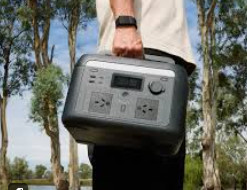
According to the AusRCM Compliance regulatory framework, "Portable Power Stations" (便携式储能电源/户外移动电源) are complex multi-module integration products. Because they feature alternating current (AC) power delivery mechanisms alongside direct current (DC) storage networks, their testing standards must be evaluated by splitting the product into individual sub-functional blocks.
The following is the clean, structured matrix of the mandatory testing and certification standards based on your product's technical configuration, formatted for direct copying:
1. Core Safety and System-Level Certification Standards (电气安全与整机模块)
Every portable power station featuring Australian AC outlet configurations or supporting wall-charging must pass dedicated safety evaluations. The system is split into the following operational nodes:
- Inverter / Discharging Module (逆变器/放电控制电路): Must be tested to AS/NZS 4763 (Safety of portable inverters). This validates insulation pathways, over-current protection, and short-circuit response parameters.
- Mains AC Charging Circuit / Internal Charger (市电输入/集成充电器电路): If the station features an integrated AC charging cord connecting straight to a 230V/240V wall socket, it functions as a Battery Charger. It must comply with AS/NZS 60335.2.29 (Particular requirements for battery chargers) used in conjunction with AS/NZS 60335.1. This configuration constitutes a Level 3 (High Risk) Prescribed Electrical Article, requiring a mandatory Certificate of Conformity (SAA Certificate).
- External Power Adapter / Charger Unit (外置独立充电器/适配器): If the station bypasses internal AC circuitry and uses an external power block to charge from the wall, that external adapter must independently pass AS/NZS 62368.1 or AS/NZS 61558 and hold its own valid SAA Certificate.
- Integrated AC Outlets / Power Pack Distribution (澳规三脚输出插座): The internal socket routing and faceplates must fulfill the construction and mechanical dimensions of AS/NZS 3112 (Plugs and socket-outlets) and AS/NZS 3105 (Electrical switchgear - Portable outlet devices).
- Information Technology & Audio/Video Safeguards (基础音视频及信息安全要求): AS/NZS 62368.1 (Audio/video, information and communication technology equipment) is implemented as the base safety standard governing general electronic component safety, superseding legacy 60950 parameters.
2. Lithium-Ion Battery Pack and Cell Safety Evidence (电池电芯强制性报告)
The internal energy storage core cannot be certified solely as part of the overall chassis; independent battery block evidence is mandatory:
- Battery Safety Isolation: IEC 62133-2 or EN 62133-2 (Secondary cells and batteries containing alkaline or other non-acid electrolytes — Part 2: Lithium systems). A valid international CB report and test sheet must be provided.
- Transport Safety Mandate: UN 38.3 (Transport of Dangerous Goods testing) accompanied by a formal Battery Test Summary (BTS) verifying compliance with thermal, vibration, and impact test profiles.
3. ACMA Electromagnetic Compatibility & Wireless Standards (电磁兼容与无线电通讯)
Because these devices utilize high-power internal switching regulators (DC-DC and DC-AC inverters), they are classified under ACMA rules as active intentional or incidental radiators:
- Base Electronic Emissions (EMC): AS/NZS CISPR 32 (Electromagnetic compatibility of multimedia equipment) or AS/NZS CISPR 14.1 depending on peripheral classification. This limits radio frequency noise generation to safeguard communication frequencies.
- Integrated Auxiliary LED Lighting (如有照明灯功能): AS/NZS CISPR 15 (Limits and methods of measurement of radio disturbance characteristics of electrical lighting and similar equipment).
- Wireless Connectivity Modules (蓝牙/Wi-Fi 智能物联模块): If the station features an app interface via Bluetooth or 2.4GHz Wi-Fi networks, it must pass AS/NZS 4268 (Radio equipment and systems — Short range devices) to ensure safe radio spectrum allocation.