
Knowledge Centre
Video game Remoter
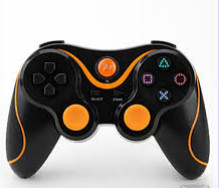
BaBased on the long-standing industry experience of AusRCM Compliance in Australia and New Zealand RCM certification, a game controller must undergo a complete testing and compliance procedure to be legally supplied and sold in the market
Step 1: Applicable EMC Testing Standards
According to the electromagnetic compatibility (EMC) regulatory arrangements administered by the Australian Communications and Media Authority (ACMA), a game controller—as a typical electronic device containing digital processing circuitry or wireless modules—falls under the scope of mandatory EMC and radiofrequency regulation. It must comply with the following technical standards:
- AS/NZS CISPR 32: Electromagnetic compatibility of multimedia equipment – Emission requirements.
- AS/NZS 4268: Radio equipment and systems – Short range devices – Limits and methods of measurement. Because most modern wireless game controllers incorporate Bluetooth, Wi-Fi, or proprietary 2.4 GHz RF modules, they are classified as short range devices and must undergo radiofrequency testing to obtain valid RF/EMF compliance reports.
- ETSI EN 300 328: This is the core European wireless standard applicable to wideband transmission systems operating in the 2.4 GHz ISM band (covering Bluetooth BR/EDR, Low Energy BLE, and Wi-Fi). It evaluates key RF parameters such as frequency occupation, transmit power, and spurious emissions, directly mapping to the requirements of the Australian AS/NZS 4268 standard. Other harmonized European standards, such as EN 55032, EN 55035, EN IEC 61000-3-2, EN 61000-3-3, EN 301 489-1, and EN 301 489-17, may also be leveraged depending on the product's specific functional characteristics.
Step 2: Safety Testing Exemptions and Limitations
Under the rules of the Australia and New Zealand Electrical Equipment Safety System (EESS), "in-scope" electrical equipment subject to electrical safety registration is strictly defined as equipment with a rated voltage greater than 50 V AC RMS or 120 V ripple-free DC.Consequently, game controllers powered exclusively by low-voltage DC (such as a 5V USB interface or standard low-voltage internal rechargeable lithium batteries) do not fall under the EESS safety registration scope. They are legally exempt from mandatory electrical safety certificates (such as SAA certificates) and do not require registration in the national EESS database.
Step 3: Signing the ACMA SDoC
Even if a low-voltage device is exempt from electrical safety registration, it remains fully subject to ACMA regulations due to its internal chipsets, switching circuits, and wireless components. A valid ACMA Supplier Declaration of Conformity (SDoC) must be signed and issued by an authorized compliance entity based in Australia or New Zealand (the Responsible Supplier, such as a local importer or an authorized local agent holding a valid ABN). Overseas manufacturers cannot sign this declaration directly; failing to have a local supplier sign the SDoC leaves the product in breach of the Radiocommunications Act, risking customs seizure or market enforcement.
Step 4: Affixing the Regulatory Compliance Mark (RCM Label)
Once the device has successfully met all applicable EMC and wireless standards, and the compliance records have been officially compiled by the local responsible supplier, the Regulatory Compliance Mark (RCM) can be applied:
- The RCM logo must be legibly and permanently affixed to the external surface of the game controller, as close as practical to the model number (typically on the rear rating plate).
- The mark must also be placed on the product packaging and accompanying user documentation, with a minimum visual height requirement of 3mm.
Extended Industry Terminology for Game Controllers
When navigating laboratory test requests, customs declarations, or optimizing product listings for major e-commerce platforms (such as Amazon Australia or eBay), the product type can be extended into several specific industry and trade terms based on connection type, terminal compatibility, and layout:
- Connection Typology & Core Technology: Wireless Gamepad, Bluetooth Gaming Controller, 2.4GHz Wireless Controller, Wired Gamepad, Low-Latency RF Controller.
- Device Compatibility & Platform Attributes: Console Controller (Console Gamepad), PC Game Controller, Mobile Gaming Joystick / Phone Grip, Switch Joy-Con / Alternative Controller, VR Motion Controller (Virtual Reality Wand), Arcade Fight Stick.
- E-commerce & Global Trade Classifications: Game Controller, Gaming Pad, Wireless Game Joystick, Video Game Accessories (frequently used for customs tariff coding and platform category node assignment).
Would you like us to review the specific RF chip and battery layout of your game controller to confirm the exact technical documentation required for your compliance folder?
Please contact us vie email: rcm@ausrcm.com.au